The Toyota Tundra isn't just another full-size pickup; it's a testament to Toyota's ambition to conquer a quintessentially American market. For over two decades, this robust truck has carved its niche, evolving significantly with each generation to meet the ever-increasing demands for power, capability, and technology. If you're looking for a definitive Overview of Toyota Tundra Generations, you've come to the right place. We’ll trace its remarkable journey from a newcomer taking on established domestic giants to a cutting-edge hybrid-powered powerhouse.
From its humble beginnings as Toyota's more substantial offering after the T100, the Tundra has consistently pushed boundaries, winning awards and loyalty along the way. It’s a compelling story of adaptation, innovation, and a relentless pursuit of durability.
At a Glance: Key Takeaways from the Tundra's Evolution
- Pioneer Spirit: The Tundra was the first full-size Japanese pickup built in North America.
- Gradual Growth: Each generation saw significant increases in size, power, and capability, especially towing.
- V8 Dominance, then Hybrid Future: After introducing Toyota's first pickup V8, the Tundra later embraced twin-turbo V6 and hybrid powertrains, moving entirely away from V8s in its latest iteration.
- Made in America: Production started in Indiana, eventually consolidating in San Antonio, Texas.
- Safety & Durability Focus: Consistently earned high safety ratings and gained a reputation for million-mile reliability.
- Adapting to Market: Introduced new cab configurations, off-road trims, and advanced safety tech to stay competitive.
The Genesis: Toyota's Full-Size Ambition Takes Root
Before the Tundra, Toyota's entry into the full-size pickup segment was the T100. While a solid truck, it was often criticized for not being "full-size enough" compared to its domestic rivals. Toyota listened, and in May 1999, the Tundra was born, initially referred to as the T150 before its official launch as the Tundra for the 2000 model year. This wasn't just an upgrade; it was a strategic move, positioning Toyota to compete head-on with the Ford F-150, Chevrolet Silverado, RAM, and Nissan Titan.
Produced entirely in the United States—first in Princeton, Indiana, then consolidating to San Antonio, Texas, in 2008—the Tundra quickly proved its mettle. It wasn't long before it began collecting accolades, including the coveted Motor Trend Truck of the Year award in its debut year (2000) and again in 2008.
First Generation (1999-2006): The Trailblazer
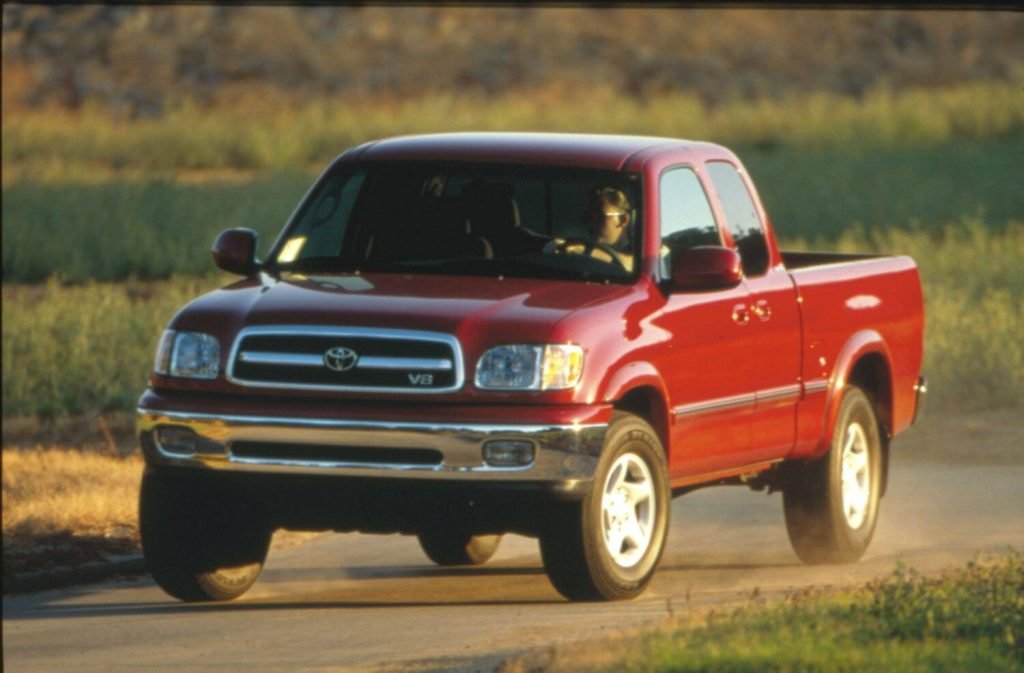
The first-generation Tundra, launched in May 1999 as a 2000 model, marked a significant step forward for Toyota in the full-size pickup arena. It was larger than its T100 predecessor and, notably, shared some components with the popular Tacoma, hinting at Toyota's commitment to building reliable, capable trucks.
Engines & Performance
Initially, buyers had two robust engine choices:
- 3.4L V6: Delivering 190 horsepower and 220 lb-ft of torque.
- 4.7L V8: A game-changer, this was Toyota's first V8 engine for a pickup truck, producing a respectable 245 horsepower and 315 lb-ft of torque.
In 2005, Toyota updated the powertrain lineup: - The V6 was replaced by a more potent 4.0L V6, boasting 236 horsepower and 266 lb-ft of torque.
- The 4.7L V8 received VVT-i (Variable Valve Timing with intelligence), boosting its output to 282 horsepower and 325 lb-ft of torque.
Transmission options included a 5-speed manual (primarily for V6 models) and a choice of 4-speed or 5-speed automatics, depending on the engine and model year. This generation offered a solid towing capacity, ranging from 6,900 to 7,100 lbs (3,130-3,221 kg), making it a serious contender for many buyers.
Design & Practicality
The first-gen Tundra initially came in Regular and Access Cab configurations. It received a subtle grille refresh in 2003, but the most significant practical update arrived in 2004 with the introduction of the Double Cab. This four-door configuration offered much more interior space for passengers and cargo, bringing it more in line with popular crew cab options from competitors.
Safety & Noteworthy Events
The first-generation Tundra also set a high bar for safety. It was the first full-size pickup to earn an overall "Good" rating from the IIHS (Insurance Institute for Highway Safety) in its frontal offset crash test, a testament to Toyota's engineering prowess. However, it wasn't without its challenges; in 2009, Toyota issued a recall for 2000-2003 Tundra models due to a concern about rear crossmember rust.
Second Generation (2007-2021): The Powerhouse Leap
The second-generation Tundra, unveiled at the Chicago Auto Show in February 2006, represented a monumental leap forward. Toyota went back to the drawing board, designing a truck that was significantly larger, more powerful, and packed with features to directly challenge the segment leaders. Its design drew inspiration from both the Tacoma and the bold FTX concept truck, signaling a more aggressive and imposing presence.
Size, Power & Configurations
This generation was all about choices and capability. Toyota offered the Tundra in an impressive 31 configurations, allowing buyers to tailor their truck precisely to their needs.
Engine options expanded and improved:
- 4.0L V6: Carried over, producing 236 horsepower and 266 lb-ft of torque.
- 4.7L V8: Updated to deliver 276 horsepower and 313 lb-ft of torque.
- 5.7L V8: The new king of the hill, this engine pumped out a formidable 381 horsepower and 401 lb-ft of torque, significantly boosting the Tundra's performance credentials.
Crucially, all versions of the second-generation Tundra were paired with a smooth and efficient 6-speed automatic transmission. This robust powertrain allowed the Tundra to achieve a maximum towing capacity of over 10,000 lbs (4,500 kg) and a payload capacity exceeding 2,000 lbs (910 kg), firmly placing it among the most capable trucks on the market.
Advanced Safety & Technology
Toyota equipped the second-gen Tundra with a comprehensive suite of standard safety features, a major selling point. These included:
- Electronic Automatic Limited-Slip Differential (Auto LSD)
- Vehicle Stability Control (VSC)
- Traction Control (TC)
- Electronic Brakeforce Distribution (EBD)
- Brake Assist (BA)
- Anti-lock Braking System (ABS)
In terms of passive safety, it came standard with dual front airbags, front side airbags, and side curtain airbags. For added protection, driver and front passenger knee airbags became standard from 2010 models onwards.
Noteworthy Events & Durability
Like its predecessor, the second-generation Tundra faced a recall, this time as part of Toyota's larger accelerator pedal recall campaign between 2009-2010 for certain 2007-2010 models. However, its reputation for bulletproof reliability was solidified in 2016 when a 2007 Tundra owned by Victor Sheppard crossed the incredible milestone of over 1,000,000 miles (1,600,000 km) on its original engine and transmission. Toyota recognized this feat by exchanging the truck for a brand new one, taking Sheppard's million-mile Tundra for detailed study of its impressive durability.
Second Generation Facelift (2014-2021): Refined & Ready
While still part of the second generation, the Tundra received a significant facelift for the 2014 model year, revealed in February 2013 at the Chicago Auto Show. This wasn't just a minor tweak; it was a comprehensive refresh designed to keep the Tundra competitive in a rapidly evolving segment, focusing heavily on aesthetics and interior comfort.
Exterior & Interior Overhaul
The exterior saw a bold redesign, featuring a larger, more prominent grille, more pronounced fender flares, and new tailgate and taillight designs that gave the truck a more modern and muscular look. Crucially, the interior underwent a complete transformation, with new seats, gauges, controls, and a completely redesigned dashboard. Only the cabin structure and doors were carried over, making the interior feel like a truly new truck.
Evolving Powertrains & Trims
Engine options continued to evolve through this facelift period:
- The 4.0L V6 was upgraded to 270 horsepower and 278 lb-ft of torque but was discontinued in 2015.
- The 4.6L V8 offered 310 horsepower and 327 lb-ft of torque but was phased out in 2020.
- The stalwart 5.7L V8, with 381 horsepower and 401 lb-ft of torque, became the standard engine across the entire Tundra lineup by 2020.
While the 6-speed automatic remained the primary transmission, a 5-speed automatic was mentioned for some 2014 models, likely paired with the V6 before its discontinuation.
This era also saw an expansion of trim levels, catering to a wider range of buyers: SR, SR5, Limited, Platinum, and the luxurious 1794 Edition (a nod to the founding year of the Texas ranch where the Tundra plant now stands).
Off-Road Prowess & Safety Tech
In 2015, Toyota introduced the highly anticipated TRD Pro trim, designed specifically for off-road enthusiasts. This model featured performance upgrades like 2.5-inch Bilstein remote reservoir shocks and an aluminum skid plate, making it an even more formidable presence on the trails.
In 2018, Toyota streamlined the lineup by discontinuing the Regular Cab with the 8-foot bed, making the Double Cab the entry-level model. That same year, LED headlights became an option, and significantly, the comprehensive Toyota Safety Sense suite became standard across the entire range, bringing features like pre-collision system, lane departure alert, and dynamic radar cruise control to all Tundra owners.
Third Generation (2021-Present): A Bold New Era
The third-generation Tundra, officially launched in September 2021 and entering production in December 2021 at the San Antonio, Texas plant, represents the most radical transformation in the truck's history. It’s a complete ground-up redesign, signalling Toyota’s commitment to pushing the boundaries of what a full-size truck can be, particularly in power and efficiency.
Platform & Powertrain Revolution
Built on the new GA-F body-on-frame platform, this Tundra features a fully-boxed frame for enhanced rigidity and durability. Perhaps the most significant change is the move away from traditional leaf springs for the rear suspension, opting instead for more sophisticated coil springs or even optional air springs, significantly improving ride comfort and handling both on and off-road.
Crucially, for the first time ever, the Tundra eliminated the V8 engine option. Instead, it offers two powerful and efficient twin-turbocharged V6 powertrains:
- 3.4L Twin-Turbo V6: Producing a robust 348 to 389 horsepower and 405 to 479 lb-ft of torque, depending on the trim.
- "i-Force Max" Hybrid: The flagship powertrain, combining the twin-turbo V6 with an electric motor for a combined total of 437 horsepower and a staggering 583 lb-ft of torque. This is a game-changer for both power and efficiency in the segment.
Both powertrains are paired with a smooth and responsive Aisin 10-speed automatic transmission, ensuring optimal power delivery and fuel economy. These advancements translate to impressive capability, with a maximum towing capacity now reaching an impressive 12,000 lbs (5,400 kg) and a maximum payload of 1,940 lbs (880 kg).
Trim Levels & Global Reach
The third-generation Tundra offers seven distinct trim levels, catering to every need from work-focused to luxury. This includes the introduction of the new top-tier Capstone trim, which offers premium features and materials.
Safety remains a priority, with the 2022 Tundra earning the prestigious IIHS Top Safety Pick+ award.
The Tundra's influence is also expanding globally. While always a North American staple, it began sales in Australia in November 2024 (as remanufactured right-hand drive models) and is slated for an official introduction in Japan in 2026, further solidifying its status as a global full-size player.
Which Tundra Generation is Right for You?
Deciding which Tundra generation suits your needs depends heavily on your priorities and budget.
- For the budget-conscious seeking reliability: The First Generation (1999-2006) offers proven Toyota durability in a more compact, yet capable, full-size package. Its V8 models are still sought after for their simplicity and robustness.
- For serious capability and a trusted workhorse: The Second Generation (2007-2021), especially with the 5.7L V8, delivers massive towing and hauling power. This generation is a sweet spot for many who prioritize brute force and renowned longevity, as evidenced by Victor Sheppard’s million-mile truck. The later facelift models (2014-2021) add modern interior comforts and advanced safety features, making them a very well-rounded option.
- For cutting-edge technology, efficiency, and refined performance: The Third Generation (2021-Present) is the clear winner. Its twin-turbo V6 powertrains, particularly the i-Force Max hybrid, offer unparalleled power and efficiency for the Tundra. The coil-spring rear suspension provides a much more comfortable ride, and its advanced safety and infotainment tech are thoroughly modern. If you're ready to embrace the future of pickups, this is your generation.
Understanding the unique journey of each generation allows you to appreciate the deliberate evolution of this remarkable truck. From pioneering the full-size Japanese pickup in America to embracing a hybrid-powered future, the Toyota Tundra's story is one of continuous growth and adaptation. To dive deeper into specific models and their features, you can always Explore Toyota Tundra generations in more detail.
Looking Ahead: The Tundra's Enduring Legacy
The Toyota Tundra has come a long way since its debut. It faced the daunting task of competing in a fiercely loyal segment, often against brands with decades of heritage. Yet, through consistent quality, steady innovation, and a commitment to durability, it has not only survived but thrived. Each generation has built upon the last, refining its capabilities, expanding its appeal, and reinforcing its reputation as a truck you can truly depend on. As it continues its journey into the future with advanced powertrains and sophisticated designs, the Tundra remains a compelling choice for anyone seeking a versatile, powerful, and reliable full-size pickup.