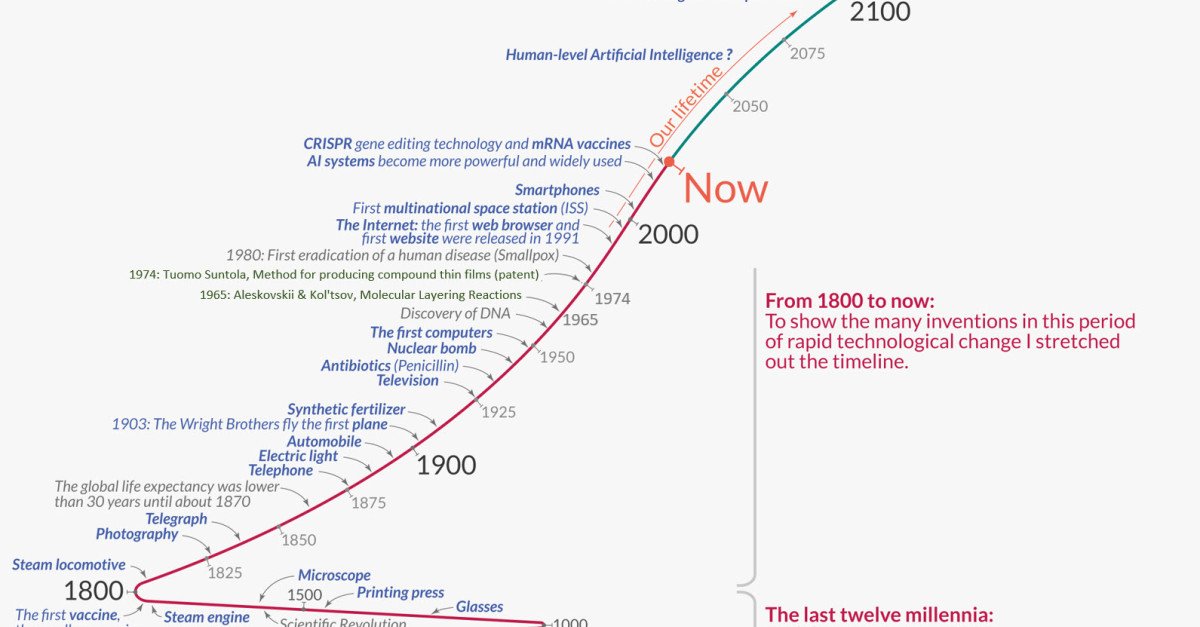
Imagine a journey not through space, but through time, tracing the indelible path of human ingenuity. Our story begins not with complex machines, but with a simple stone. The evolution of Technology & Features Through the Years isn't just a chronicle of inventions; it's a mirror reflecting our deepest needs, our boundless curiosity, and our relentless drive to shape the world around us. From the first crude tool to globe-spanning artificial intelligence, technology has consistently redefined what it means to be human, altering how we communicate, work, live, and even think.
While the pace of change was glacial for millennia, it has accelerated at an astonishing rate in recent generations. Understanding this journey isn't just about looking back; it’s about grasping the forces that propel us forward, demanding our informed engagement with the future.
At a Glance: Humanity's Technological Milestones
- Early Innovations: Simple stone tools for survival, followed by the revolutionary control of fire.
- Agricultural Shift: The Neolithic Revolution saw tools for farming and the invention of the wheel, leading to settled communities.
- Mastering Materials: The Bronze and Iron Ages brought metallurgy, transforming tools, weapons, and infrastructure.
- Knowledge & Power: The Middle Ages introduced mechanization like windmills, while the printing press democratized information during the Renaissance.
- Industrial Transformation: The steam engine kickstarted mass production, reshaping economies and urban landscapes.
- Information Age: The 20th century saw flight, electronics, computers, and the internet connect the world.
- Digital Frontier: The 21st century is marked by ubiquitous digital devices, AI, and automation, pushing the boundaries of human capability.
- Future Implications: Today's rapid technological advancement, especially with AI, raises critical questions about power, control, and the future of human society.
The Dawn of Ingenuity: From Stone to Survival
For hundreds of thousands, even millions, of years, human technological progress moved at a crawl. Yet, within that glacial pace lay foundational breakthroughs that set the stage for everything that followed. It began with the most basic of needs: survival.
Shaping the World with Stone
Over 2.5 million years ago, our early ancestors, likely Homo habilis, began chipping stones to create rudimentary cutting, chopping, and scraping tools. This Oldowan culture marked the true dawn of technology. These weren't just rocks; they were deliberate modifications of nature, extensions of the hand designed to process food, skin animals, and gather resources more efficiently. Imagine the sheer leap in capability: suddenly, tough hides could be pierced, tubers dug up, and bones cracked open for marrow.
Around 1.7 million years ago, a new wave of innovation emerged with Acheulean tools. The most iconic of these was the handaxe – a remarkably versatile, teardrop-shaped tool demonstrating a sophisticated understanding of symmetry and function. It could cut, chop, scrape, and even act as a projectile. This wasn't just about making a tool; it was about designing a better tool, a clear signal of cognitive advancement and an early form of problem-solving that would define our species.
Mastering Fire: The First Great Leap
Perhaps no single technological feature transformed early human existence as profoundly as the control of fire. This wasn't merely finding fire after a lightning strike; it was the ability to create it, sustain it, and harness its power. With fire came:
- Warmth and Protection: Extending human habitation into colder climates and deterring predators.
- Cooked Food: Making a wider range of foods digestible, increasing nutrient absorption, and reducing the energy spent on chewing. This caloric boon likely fueled brain development.
- Extended Activity: Light from fires pushed back the darkness, allowing for more hours of work, tool-making, and social interaction.
- Advanced Tool-Making: Heat treatment could make stone tools sharper and more durable, a subtle but significant upgrade in early manufacturing.
More than just practical benefits, fire deeply shaped human social structures and cultural practices, becoming a central gathering point, fostering storytelling, and solidifying community bonds. It was, in essence, our first domesticated energy source.
The Great Transformation: Agriculture, Community, and the Wheel
Fast forward to roughly 12,000 years ago, and humanity stood on the precipice of its next colossal transformation: the Neolithic Revolution. This wasn't a single invention, but a paradigm shift from a nomadic hunter-gatherer existence to settled agricultural communities. This fundamental change necessitated – and spurred – an entirely new suite of technologies.
Tools for Taming the Land
As humans transitioned from foraging to farming, they needed tools to cultivate crops and domesticate animals. The plow, initially a simple stick dragged through the soil, evolved into animal-drawn versions, dramatically increasing the area that could be tilled. The sickle allowed for efficient harvesting of grains, while grinding stones processed those grains into flour, providing a stable food source. These innovations didn't just make life easier; they made settled life possible, leading to predictable food surpluses and the ability to sustain larger populations.
The Wheel: Spinning a New World
Around 3500 BCE, one of the most iconic inventions in human history emerged: the wheel. Its initial application wasn't for chariots or wagons, but for pottery, enabling artisans to create vessels with unprecedented speed and symmetry. However, its true revolutionary impact came with its application to transportation.
The wheel, paired with the axle, unlocked:
- Revolutionized Transportation: Carts and chariots dramatically increased the capacity for carrying goods and people, making long-distance travel more efficient.
- Boosted Trade and Communication: Goods could move farther and faster, fostering economic exchange and cultural diffusion.
- Transformed Warfare: Chariots offered a swift and powerful platform for combat, fundamentally changing military tactics and strategy.
The shift to agriculture, combined with the power of the wheel, facilitated the establishment of permanent villages, which grew into cities. This surplus of resources and labor allowed for specialized crafts, the flourishing of art, and the development of early forms of writing – the hallmarks of civilization.
Forging Empires: The Ages of Metal
With settled communities and a growing understanding of materials, humanity moved beyond stone, ushering in eras defined by the mastery of metals. These breakthroughs provided stronger, more durable materials, again fundamentally reshaping societal structures, warfare, and infrastructure.
The Bronze Age: Harder, Sharper, Stronger
Around 3000 BCE, a monumental discovery changed the course of history: smelting. By heating and combining copper and tin, early metallurgists created bronze, an alloy significantly harder and more durable than pure copper or stone.
Bronze tools and weapons quickly became superior. Imagine a bronze sword versus a stone axe in battle, or a bronze plowshare turning soil more effectively. This technological leap spurred:
- Advanced Weaponry: Bronze swords, shields, and spearheads gave military advantages, leading to more organized warfare and the rise of powerful empires.
- Improved Tools: Bronze axes for felling trees, chisels for intricate carving, and tools for construction became widespread.
- Infrastructure Growth: Bronze was essential for stronger irrigation systems, fortifications, and more robust ships, facilitating long-distance trade and exploration.
This era saw the rise of sophisticated civilizations like Mesopotamia, Ancient Egypt, and the Indus Valley, all underpinned by their ability to harness and control bronze technology.
The Iron Age: Abundance and Transformation
The Bronze Age eventually gave way to the Iron Age around 1200 BCE. While iron is more abundant than copper or tin, its higher melting point and complex forging process initially made it more challenging to work with. However, once mastered, iron metallurgy provided an even stronger and more accessible material.
Iron's widespread availability meant:
- Democratization of Tools: No longer reliant on scarce copper and tin, iron tools became more accessible to common farmers and artisans. Iron plows could cut deeper into the earth, increasing agricultural yields.
- Superior Weaponry: Iron weapons were generally stronger and could hold a sharper edge than bronze, again shifting military power.
- Building the Future: Iron became a critical material for construction, enabling larger and more robust structures.
Societies were transformed as iron tools improved agriculture and industry, supporting even larger populations and more complex social hierarchies.
Roman Engineering: Building to Last
While many civilizations contributed to metalworking, the Romans truly excelled in applying these principles to create enduring infrastructure. Their prowess in engineering is legendary, characterized by durability, efficiency, and a scale previously unseen.
Key Roman engineering features include:
- Roads: A vast network of durable, all-weather roads, spanning thousands of miles, facilitated rapid troop movement, trade, and communication across their immense empire.
- Arches and Concrete: Perfecting the arch allowed for massive, stable structures like aqueducts, bridges, and the iconic Colosseum. Their invention of concrete, made from volcanic ash, provided a strong, waterproof, and long-lasting building material that revolutionized construction.
These technological achievements were not just impressive feats of engineering; they were foundational to the administration, economy, and longevity of the Roman Empire, showcasing how sophisticated technological application can sustain vast political entities.
Knowledge Unleashed: Mechanization and the Printed Word
As the ancient world faded, the Middle Ages and Renaissance brought their own distinct flavors of technological advancement, focusing on harnessing natural power and democratizing knowledge.
Mechanizing the Mundane
The Middle Ages saw significant developments in mechanization, particularly in agriculture and basic industry. Innovations like the waterwheel and windmill (the latter first appearing in Persia around the 9th century) provided crucial power sources.
- Waterwheels: Harnessing the kinetic energy of flowing water, these structures mechanized tasks like grinding grain, sawing timber, and even powering bellows for blacksmiths.
- Windmills: Utilizing wind power, windmills similarly boosted agricultural productivity by grinding grain and pumping water for irrigation or drainage.
These machines significantly increased efficiency, freeing up human and animal labor for other tasks and contributing to sustained population growth and economic development. They were early examples of how technology could amplify human effort.
The Printing Press: Igniting a Revolution of Ideas
The 15th century delivered an invention whose impact on human progress is almost impossible to overstate: Johannes Gutenberg's printing press. While forms of printing existed earlier, Gutenberg's system of movable type, combined with an oil-based ink and a robust press mechanism, made mass production of books feasible and affordable.
The printing press was a game-changer because it:
- Democratized Knowledge: Books, once scarce and expensive, became accessible to a wider populace. This directly spurred literacy rates and fostered critical thinking.
- Disseminated Ideas: Scientific discoveries, religious texts, political pamphlets, and artistic concepts could spread rapidly across continents, accelerating the Renaissance and the Reformation.
- Standardized Information: Multiple identical copies reduced errors inherent in hand-copying, leading to greater consistency in texts.
The printing press didn't just reproduce words; it reproduced ideas, lighting the fuse for intellectual, scientific, and social revolutions that would define the modern world.
Powering Progress: The Industrial Revolution
The late 18th century marked another epochal shift, the Industrial Revolution, fundamentally transforming economies, societies, and daily life. At its heart was the mastery of a new form of power.
The Steam Engine: Driving a New Era
James Watt's improvements to the steam engine in the 1770s were the catalyst for the Industrial Revolution. This invention harnessed the power of steam to create rotary motion, providing a reliable and portable energy source that wasn't dependent on wind or water.
The steam engine's impact was monumental:
- Mass Production: Factories could now be located anywhere, not just by rivers. Steam-powered machinery drove looms, spinning jennies, and countless other industrial processes, leading to unprecedented levels of mass production in textiles, coal mining, and iron production.
- Revolutionized Transportation: The steam engine powered the first locomotives, giving birth to the railroad. This not only facilitated the rapid movement of raw materials and finished goods but also transformed personal travel. Steamships revolutionized maritime transport, making global trade faster and more predictable. For example, the evolution of powerful, reliable engines in the transportation sector mirrors broader technological advancements; Explore Toyota Tundra generations and you'll see a similar progression of power and features over time in a modern context.
- Urbanization and Social Change: The factory system drew people from rural areas to cities in search of work, leading to rapid urbanization and the emergence of new social classes and labor movements.
The Industrial Revolution wasn't just about machines; it was about a fundamental restructuring of work, society, and humanity's relationship with production and progress.
Leaping into the Modern Era: Electronics and Global Connection
The 20th century witnessed an acceleration of technological advancement unparalleled in human history, characterized by breakthroughs in flight, electronics, and information technology that shrunk the world and expanded our capabilities.
Taking Flight: A New Dimension of Travel
The Wright brothers' achievement of the first powered flight in 1903 at Kitty Hawk was a truly watershed moment. It transformed our understanding of travel, warfare, and human limits. What was once the realm of birds and dreams became a tangible reality.
- Revolutionizing Travel: Airplanes dramatically reduced travel times, connecting distant continents and fostering globalization.
- Transforming Warfare: Aerial reconnaissance and combat introduced a terrifying new dimension to conflict.
- A Symbol of Progress: It's remarkable that many individuals alive in 1903 witnessed both the first plane and, within their lifetime, humanity's first steps on the moon—a testament to the century's incredible pace of innovation.
The Digital Dawn: From Transistors to the Internet
While the steam engine defined the 19th century, the 20th century, particularly its latter half, was shaped by electronics and computing.
- The Transistor (1947): This tiny semiconductor device, developed at Bell Labs, replaced bulky vacuum tubes, enabling the creation of smaller, more efficient, and more reliable electronic devices. It was the fundamental building block for all modern electronics.
- The First Computers: From room-sized behemoths like ENIAC, designed for complex calculations, computing power gradually became more accessible. The invention of the microprocessor in the early 1970s was a critical step, enabling the development of personal computers. Suddenly, computing power began to move from specialized labs to offices and eventually homes.
- The Internet (1990s): What began as ARPANET, a military and academic network, evolved into the World Wide Web. The internet connected computers globally, facilitating instant communication, information sharing, and eventually creating an entirely new digital landscape. This ushered in the digital revolution, forever changing commerce, education, entertainment, and social interaction.
These innovations laid the groundwork for the hyper-connected, information-rich world we inhabit today, making vast amounts of data accessible at our fingertips and enabling global collaboration on an unprecedented scale.
The Exponential Present: Digital, AI, and the Future's Edge
The 21st century has taken the digital revolution to an entirely new level, pushing the boundaries of what's possible and introducing technologies with profound implications for the human experience.
The Ubiquitous Digital Revolution
The proliferation of smartphones and connected devices has transformed nearly every aspect of daily life. These aren't just phones; they are powerful mini-computers, cameras, navigation systems, and entertainment hubs, all rolled into one.
- Instant Communication: Social media platforms, messaging apps, and video calls have made global communication effortless and ubiquitous.
- Global Economy: E-commerce, online education, and remote work have reshaped industries, creating new opportunities and challenging traditional models.
- Data-Driven Living: Our digital interactions generate vast amounts of data, which in turn fuels further technological development and personalized experiences.
This era is characterized by an always-on, always-connected paradigm, where information is abundant, and interactions are instantaneous.
Artificial Intelligence and Automation: Reshaping Reality
Perhaps the most significant technological frontier of our time is Artificial Intelligence (AI) and Automation. These technologies are moving beyond simple programming to enable machines to learn, adapt, and perform tasks that once required human intellect.
- Transforming Industries: AI is revolutionizing healthcare (diagnosis, drug discovery), finance (algorithmic trading, fraud detection), transportation (self-driving cars), and countless other sectors.
- Rethinking the Workforce: Automation is taking over repetitive or dangerous tasks, while AI assists with complex decision-making and creative processes, reshaping the nature of work and demanding new skills from the human workforce.
- Beyond Human Limits: AI can analyze vast datasets, identify patterns, and make predictions far beyond human cognitive capacity, offering solutions to complex global challenges.
These technologies are not just improving existing processes; they are creating entirely new possibilities, from personalized medicine to intelligent infrastructure.
Beyond the Horizon: Shaping What's Next
Looking back at Technology & Features Through the Years reveals a consistent pattern: human ingenuity responding to needs and desires, resulting in progress that, though initially slow, has become extraordinarily fast. Today, we stand at a unique inflection point. The pace of technological change is not just fast; it's accelerating. Technologies like AI are not just products of innovation; they are becoming drivers of innovation themselves, capable of achieving decades of progress in a single year.
This rapid ascent brings immense power. From rudimentary stone tools to globe-spanning AI networks and nascent gene-editing capabilities, technology amplifies human intent, both benevolent and malevolent. The critical questions of our time are no longer just what technologies we can develop, but which ones we should develop, and, crucially, who controls them.
This isn't a purely scientific or engineering challenge; it's a profound political and ethical one. It demands public knowledge, informed debate, and a collective vision for how these powerful tools will shape our shared future. By understanding this long, winding journey of technological evolution, we equip ourselves not just to witness the future, but to actively participate in its creation, ensuring that our progress truly serves human flourishing. The journey continues, and our role in shaping it has never been more vital.