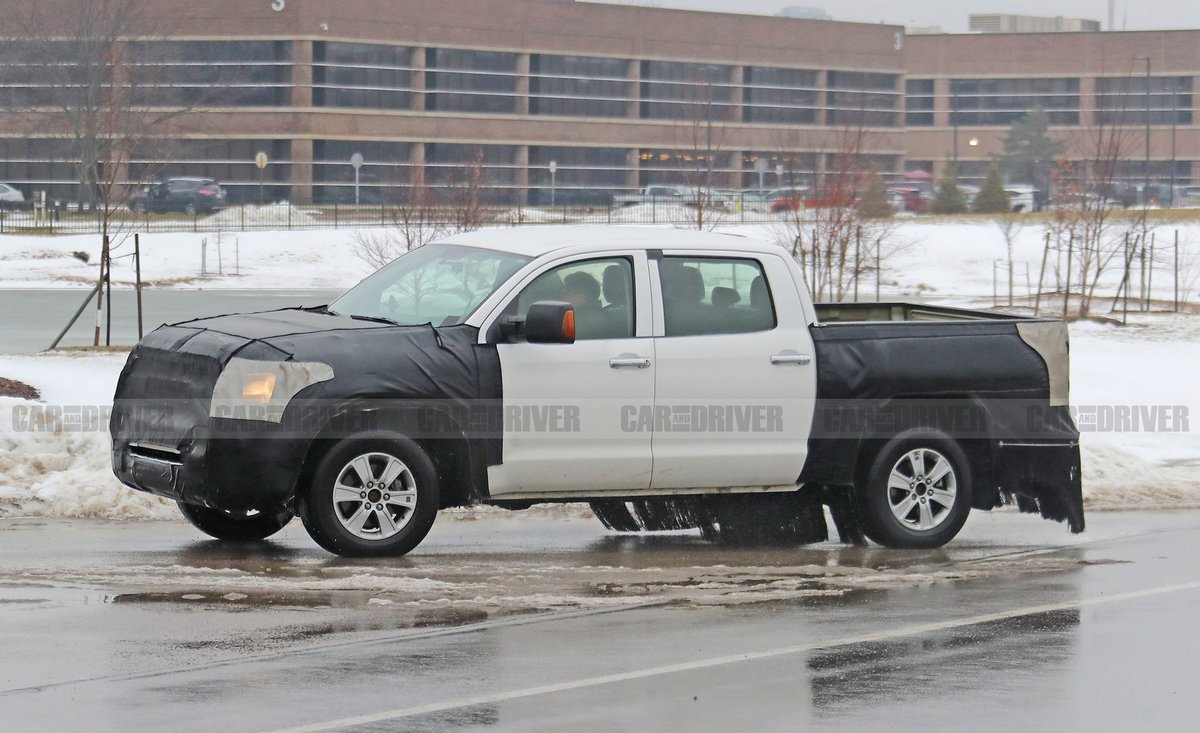
The Toyota Tundra isn't just another full-size pickup; it's a testament to Toyota's commitment to the demanding North American truck market. For over 25 years, this rugged workhorse has evolved, growing from a capable contender into a dominant force, challenging long-established domestic rivals. Built entirely in the United States, the Tundra has undergone three significant generational transformations, each bringing greater power, capability, and refinement.
This article serves as your ultimate hub to navigate the Tundra's rich history, offering a comprehensive overview and guiding you to deeper dives on every facet of its journey. To truly appreciate how far this truck has come, you'll want to Explore Toyota Tundra Generations in detail.
The Tundra's Enduring Legacy: Born in North America
The Tundra story began in May 1999 with the introduction of the 2000 model year, marking a significant milestone: it was the first full-size pickup from a Japanese manufacturer built in North America. Initially considered as the "T150," a swift Ford lawsuit quickly prompted a name change to Tundra, cementing its identity. Production commenced in Princeton, Indiana, quickly establishing Toyota's serious intentions in the segment.
From its very first year, the Tundra made an impact, with sales of 107,798 units in 2000, doubling that of its predecessor, the Toyota T100. This early success demonstrated a clear demand for a reliable, capable full-size truck wearing the Toyota badge.
First Generation (MY2000-2006): Laying the Groundwork for Greatness
The inaugural Toyota Tundra, chassis code XK30, established a solid foundation. It arrived with a choice of engines: a dependable 3.4L V6 and, for the first time in a Toyota pickup, a potent 4.7L "i-Force" V8. This V8, initially producing 245 horsepower, immediately set the Tundra apart, offering serious hauling and towing capability for the time.
Its commitment to excellence was recognized early on, earning Motor Trend magazine's Truck of the Year award in 2000. Safety was also a priority, with the Tundra becoming the first full-size pickup to achieve an IIHS "Good" rating in frontal offset crash tests. For those needing more passenger space, the Double Cab (a crew cab with four rear-opening doors) was a welcome addition in 2004, exclusively available with the V8 engine.
While generally reliable, early models did see recalls for issues like rear crossmember rust and faulty ball joints. Understanding the specific characteristics, strengths, and weaknesses of each model year is crucial, and you can get a clearer picture of Reliability & Common Issues by generation.
Second Generation (MY2007-2021): Growing into a True Challenger
The Second Generation Tundra (XK50) represented a massive leap forward, unveiled in January 2007 as a 2007 model. It was bigger, bolder, and much more capable, ready to compete head-on with domestic stalwarts. Production consolidated to Toyota's dedicated truck plant in San Antonio, Texas, underscoring its American roots with a 75% North American parts content.
This generation introduced a brand-new 5.7L V8 engine, delivering an impressive 381 horsepower and 401 lb⋅ft of torque, significantly boosting its workhorse credentials. Towing capacity soared, easily exceeding 10,000 pounds with the 5.7L V8, making it a serious contender for heavy-duty tasks. To dive deeper into the impressive capabilities of these trucks, you'll want to Understand towing capacity and performance.
Engine choices evolved throughout this generation; while the 4.7L V8 and 4.0L V6 were initial options, a new 4.6L V8 replaced the 4.7L in 2010. By 2020, the powerful 5.7L V8 became the standard engine across the range. For a deeper dive into the powerplants that defined each era, make sure to check out our guide on Engine & Powertrain Evolution.
The Second Gen Tundra also underwent significant facelifts, notably in 2010 and a comprehensive refresh in 2014, which brought a more aggressive exterior, a completely redesigned interior, and new premium trims like the 1794 Edition. If you're curious about how Toyota refined the Tundra's cabins and external styling over the years, you can Learn interior design Explore interior design. Safety features also saw continuous improvement, with standard Vehicle Stability Control (VSC) from the outset and Toyota Safety Sense becoming standard in 2018.
This generation is celebrated for its incredible durability, famously demonstrated by a 2007 Tundra logging over 1,000,000 miles before being exchanged by Toyota for research. It even pulled the Space Shuttle Endeavour, showcasing its formidable strength. However, even robust vehicles can have specific issues, such as early 5.7L V8 camshaft failures or accelerator pedal recalls, which are important considerations covered when you look at Reliability & Common Issues by generation.
Third Generation (MY2022-Present): Redefining Modern Truck Power
The Third Generation Tundra (XK70), officially unveiled in late 2021, represents the boldest transformation yet. Signaling a decisive shift in powertrain philosophy, Toyota completely dropped the V8 engine option. Instead, it introduced a new 3.4L twin-turbocharged V6 and a revolutionary hybridized "i-Force Max" version of that V6, delivering a staggering 437 horsepower and 583 lb⋅ft of torque. Both are mated to a smooth 10-speed automatic transmission.
Built on the new GA-F body-on-frame platform, this Tundra features an updated fully-boxed frame and a modern rear coil or air spring suspension, significantly improving ride quality and handling. Its capability metrics are equally impressive, with a maximum towing capacity of 12,000 pounds and a payload of 1,940 pounds. If you're looking to push the boundaries of what a modern truck can do, you'll certainly want to Understand towing capacity and performance for the latest models.
Available in Double Cab and CrewMax configurations, and with seven distinct trim levels including the rugged TRD Pro and the luxurious Capstone, the Third Gen Tundra offers unprecedented variety. It also boasts an IIHS Top Safety Pick+ award, underscoring its advanced safety. While a recall for possible engine debris has been noted for early models, Toyota's commitment to quality remains a core tenet, which you can further explore in our guide on Reliability & Common Issues by.
The Tundra's Impact: More Than Just a Truck
Beyond its direct evolution, the Tundra has made its mark in other areas. It joined the NASCAR Craftsman Truck Series in 2004, quickly achieving success and helping Toyota secure numerous manufacturer championships. Its global presence has also expanded, with official sales in various international markets and plans for a Japanese introduction in 2026, showcasing its broad appeal.
From its humble beginnings as Toyota's first full-size pickup built in North America, the Tundra has steadily grown, adapted, and innovated. Each generation reflects Toyota's dedication to meeting the evolving needs of truck owners, blending robust capability with everyday comfort and cutting-edge technology. Whether you're a long-time Tundra enthusiast or considering one for your next adventure, understanding its journey through these distinct generations provides invaluable insight into what makes this truck truly special.